
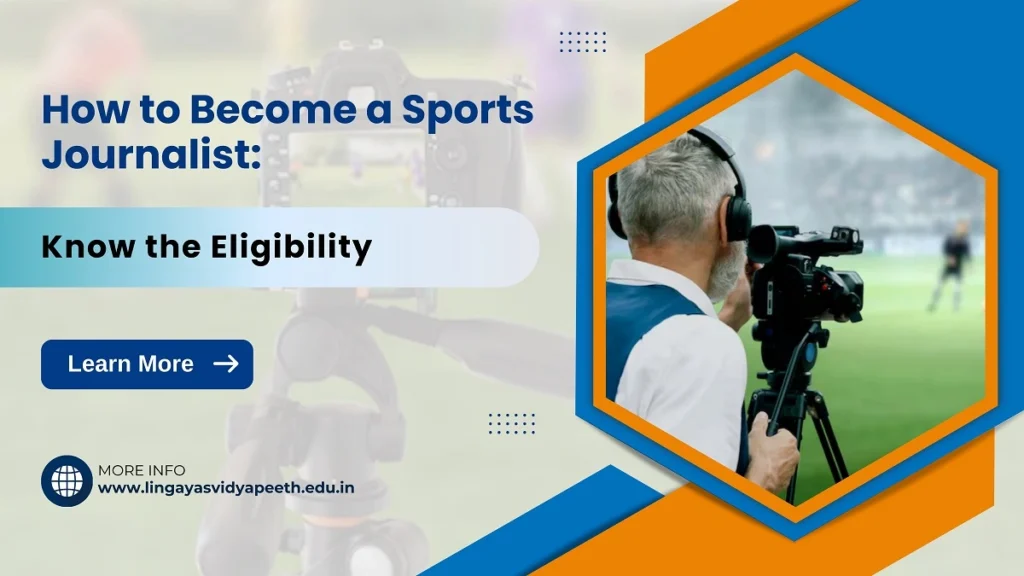
Do you enjoy talking about player performances and game results with friends? If yes, learning how to become a sports journalist could be a smart career choice for you. Sports journalism is an exciting field that lets you turn your love for sports into meaningful work.
In India, the sports industry is growing fast and creating new career options. Women’s sports are getting more attention and are expected to see double the investment by 2026. Cricket and football still attract the biggest audiences, while digital platforms now connect with over 70 percent of sports fans. Because of this growth, there is a rising need for clear reporting, simple analysis, and engaging stories. If sports and storytelling excite you, this is the perfect time to explore how to become a sports journalist.
What Does a Sports Journalist Do?
A sports journalist covers games and sports stories every day. They report live from stadiums, training centers, and press events. Interviewing players, coaches, and team staff is an important part of the job. Writing match reports, previews, and post-match analysis helps fans understand the game better. Many journalists also create videos, podcasts, or social media posts to reach more people. The job moves fast and can change at any time. One day you might cover a cricket match in Mumbai, and the next day you could be editing a football story online.
Sports journalists work in newspapers, television, radio, websites, and on social media platforms. They do more than share scores and results. They explain tactics, highlight strong performances, and point out new trends. Knowing these daily tasks makes it easier to understand how to become a sports journalist in the real world.
The Essential Sports Journalism Qualifications
A good education is important in sports journalism. Students should start preparing after finishing school. Choosing the right degree helps improve writing and reporting skills. sports journalism qualifications include strong language skills, especially in English, because clear writing is very important. Basic math helps when working with scores and player statistics. Simple science knowledge is useful for writing about fitness and injuries.
Students must pass Class 12 with at least 50 percent marks for most courses. Some colleges also take entrance tests to check writing and general knowledge. Reading newspapers and sports magazines helps build awareness. Watching big events like the Olympics or World Cups also improves understanding. Meeting journalists and attending local sports events builds confidence. These steps make it easier to learn how to become a sports journalist.
Journalism Courses After 12th: Degrees & Diplomas
After completing Class 12, choosing the right course is a very important step. Different academic programs help students learn the basic skills needed for journalism and media jobs.
- BA in Journalism and Mass Communication (BAJMC): This is a three-year undergraduate course. It teaches reporting, editing, media ethics, and digital journalism. Lingaya’s Vidyapeeth offers a well-planned BAJMC program with modern media labs and hands-on training. Students also get real internship experience during the course. The fee is extremely affordable, which makes it a good and affordable choice for beginners interested in sports journalism.
- Bachelor of Journalism (BJ): This is a three-year degree that focuses on news writing and reporting skills. It is suitable for students who want to work in print or TV journalism, especially in sports reporting.
- Diploma in Journalism: This course usually lasts one or two years. It teaches the basics of journalism in a short time. It is ideal for students who want to start working quickly.
- BA in Mass Communication: This three-year program includes subjects like advertising and public relations. Students can choose sports journalism as a focus later.
- Bachelor of Mass Media (BMM): This course teaches media production and management. It helps students understand digital tools used in sports reporting.
Lingaya’s Vidyapeeth is known for its practical BAJMC program. It helps students clearly understand how to become a sports journalist and prepare with confidence.
Must-Have Skills Required for Sports Journalists
Some skills are very important in sports journalism. These skills grow with practice and real experience.
- Deep Sports Knowledge: You should understand game rules and players well. This helps you report correctly. Following many sports is useful.
- Strong Writing Abilities: Your writing should be clear and simple. Good writing keeps readers interested. Editing helps remove mistakes.
- Excellent Communication: You must speak clearly during interviews. Confidence helps during live reporting. Clear speech builds trust.
- Research Expertise: Always check facts before publishing. Use trusted sources only. This keeps your work accurate.
- Analytical Thinking: You should explain important moments in games. This helps fans understand what happened.
- Multimedia Proficiency: Knowing videos and social media is helpful. Digital skills help you reach more people.
- Time Management: You must finish work on time. Planning helps during live events.
Learning these skills required for sports journalists helps you understand how to become a sports journalist step by step.
Getting Real Experience: Sports Journalism Internship Opportunities
Internships help students learn by doing real work. sports journalism internship opportunities show students how newsrooms work each day. Interns may write small match reports or help senior reporters. They may also help with websites or social media posts. Lingaya’s Vidyapeeth helps BAJMC students find internships with media groups. These internships usually last two or three months. They help students gain confidence and real experience. This experience is important when learning how to become a sports journalist.
Building Your Portfolio and Personal Brand
A good portfolio shows your work to others. It helps people see what you can do. You can create a personal blog or website to share your articles and match reports. Posting your work online helps more people find you. Sharing content on social media builds trust and visibility. Focusing on one sport can make your work stronger. Talking to others through workshops or online groups also helps. These steps support your growth while learning how to become a sports journalist.
Exploring the Sports Reporting and Media Career Landscape
The sports reporting and media career has many job options. You can work in newspapers, TV, radio, or online. Some jobs are for reporters, while others are for editors or presenters. Many people make videos or posts for websites. Digital media is growing fast, so new jobs keep coming. The sports journalist career path gives good chances to grow and have a long career.
Sports Journalist Salary in India: What to Expect
Salaries for sports journalists depend on experience, city, and employer.
- Entry-Level Positions: Fresh graduates usually earn ₹3–7 lakhs per year. In smaller cities, the pay may be ₹2.5–5 lakhs.
- Mid-Level Roles: With 3–5 years of experience, journalists can earn ₹6–10 lakhs per year. Metro cities usually pay more.
- Senior-Level Jobs: Experienced journalists earn ₹10–15 lakhs or more. Top professionals can earn up to ₹20 lakhs.
Freelancers earn money per article, depending on their work and audience. Knowing the sports journalist salary in India helps plan your path to how to become a sports journalist.
Your Action Plan: First Steps to Break Into the Field
Complete your 12th grade with strong marks and choose a relevant journalism course. BAJMC at Lingaya’s Vidyapeeth offers the right balance of theory and practice. Build skills daily, seek internships early, and create a portfolio. Networking and consistency are key to success.
Why Choose Lingaya’s Vidyapeeth?
Lingaya’s Vidyapeeth has a complete BAJMC program for students who want to work in journalism. The course has modern labs where students can practice reporting and editing. Teachers have lots of experience and guide students step by step. Students also get internships to learn how real newsrooms work. The campus is near Delhi NCR, so students can see the media industry up close. The program is affordable and teaches digital skills and ethical journalism. This helps students learn how to become a sports journalist and get ready for jobs.
Highest Package and Alumni Success Story
Lingaya’s Vidyapeeth has seen placement packages go up to ₹15 lakhs. Saumya Patel, a 2023 BAJMC graduate, now works at Star Sports and earns ₹12 lakhs a year. She gained experience through internships, help from teachers, and hands-on training. This practical learning helped her build a strong career.
Her story shows how Lingaya’s Vidyapeeth trains students well and prepares them to learn how to become a sports journalist and succeed in the field.
Final Words
You now know clearly how to become a sports journalist. The path needs good education, practice, and real work experience. You also need to build skills in writing, reporting, and using digital tools. With hard work and support from places like Lingaya’s Vidyapeeth, you can start a strong and rewarding career.
This career lets you tell exciting stories about sports and share them with fans. Following these steps will help you succeed and enjoy your work as a sports journalist.
Also Read
How to become a film producer
CUET UG 2026 Registration Open: Complete Guide
Top 25 Fastest-Growing Jobs in India for 2026
SWAYAM Exam Dates 2026: Jan Schedule, Fees & Tips
How to become an auditor