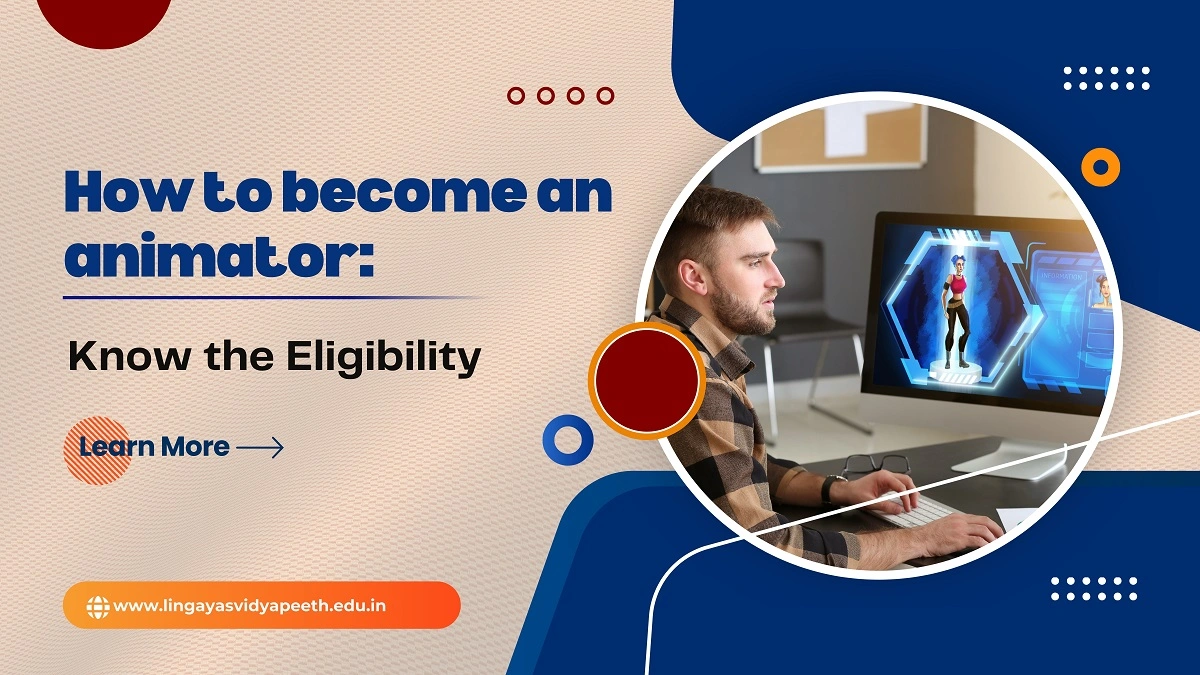
Do you enjoy watching animated movies and cartoons? Do you ever wonder how characters move so smoothly on screen? If you love creativity and storytelling, animation could be the right career for you. The animation industry in India is growing very fast and creating thousands of new jobs. Learning how to become an animator today can open doors to exciting roles in films, games, advertising, and digital media.
India’s animation market was worth 1.89 billion USD in 2024. Experts expect it to grow to 24.48 billion USD by 2032. This means strong demand for skilled animators in the coming years. From OTT platforms to mobile games, animation is everywhere.
This blog explains how to become an animator, what skills you need, which courses to choose, and why Lingaya’s Vidyapeeth can be a great place to start.
An animator makes pictures move. They use drawings or computer images. Their work turns still pictures into moving scenes. These scenes tell stories and show feelings. Animators do more than draw. They decide how characters move and react. They also show how characters act in their world.
Core responsibilities of an animator include:
Knowing these duties helps when learning how to become an animator. It prepares you for the creative and technical sides of the job.
Education is important for an animation career. It helps students learn the basics in a clear way. Animator qualifications usually start after class 12. Students from any stream can choose animation. Arts students may find drawing easier at first. Science and commerce students can also do well with practice.
Lingaya’s Vidyapeeth offers a B.Voc in Multimedia & Animation course. The course focuses on hands-on learning. Students work on real projects during classes. They learn by practice and guidance. This approach helps students understand how to become an animator in a clear and practical way.
Students who like animation have many learning options. Animation courses after 12th come in different forms. These include degree courses, diploma courses, and vocational programs. Each option suits different career plans and time goals.
Lingaya’s Vidyapeeth updates its course content regularly. The fees are kept affordable for students. The strong focus on jobs makes it a good choice for students who want to learn how to become an animator and build a career.
Animation depends strongly on skills. These skills improve with regular practice. Animation skills required include more than just drawing. Animators also need technical skills and people skills.
Lingaya’s Vidyapeeth helps students build these skills through workshops and practice work. Teachers guide students at every step. This balanced learning method helps students understand how to become an animator in a clear and effective way.
Technology is very important in animation. Animation software for beginners should be easy to use. It should also help students improve their skills over time.
Popular tools used by beginners include:
Lingaya’s Vidyapeeth teaches students how to use these tools. Students get hands-on practice with guidance from teachers. Learning software well is an important step in knowing how to become an animator.
Animation jobs usually fall into two main types. A 2D and 3D animation career gives different ways to work with pictures.
Career paths include:
Lingaya’s Vidyapeeth teaches both 2D and 3D animation. Students can try both and pick what they like most. Learning these options helps students understand how to become an animator and choose the right job for them.
The animator career grows step by step. Most people start by learning. Then they gain experience over time.
This clear step-by-step path helps students see how to become an animator and what jobs they can do later.
Pay in animation depends on skill and experience. Animator salary in India shows that trained animators are needed.
Lingaya’s Vidyapeeth helps students find jobs and gives career advice. This support helps graduates get good starting work. Knowing they can earn money makes students want to learn how to become an animator.
Picking the right college helps your future in animation. Lingaya’s Vidyapeeth has many good reasons to join.
These points make Lingaya’s Vidyapeeth a great place to learn how to become an animator.
Lingaya’s Vidyapeeth has many successful alumni in animation. Raj Chauhan, from the 2020 batch, finished the B.Voc in Multimedia & Animation. He got a 10-lakh yearly salary at DreamWorks India. This was the highest salary in his batch. Raj had no art experience before. He learned skills with help from teachers and practice every day. His story shows how good education and hard work can teach students how to become an animator successfully.
Animation is a creative career for the future. The industry is growing fast and has many jobs. You now know how to become an animator, from learning to skills and pay. With good training and regular practice, anyone can succeed. Lingaya’s Vidyapeeth gives strong support with its B.Voc in Multimedia & Animation.
Also Read
How to become a Sports agent
How to become a Radiologist
How to become a Stock broker
How to become a Journalist