
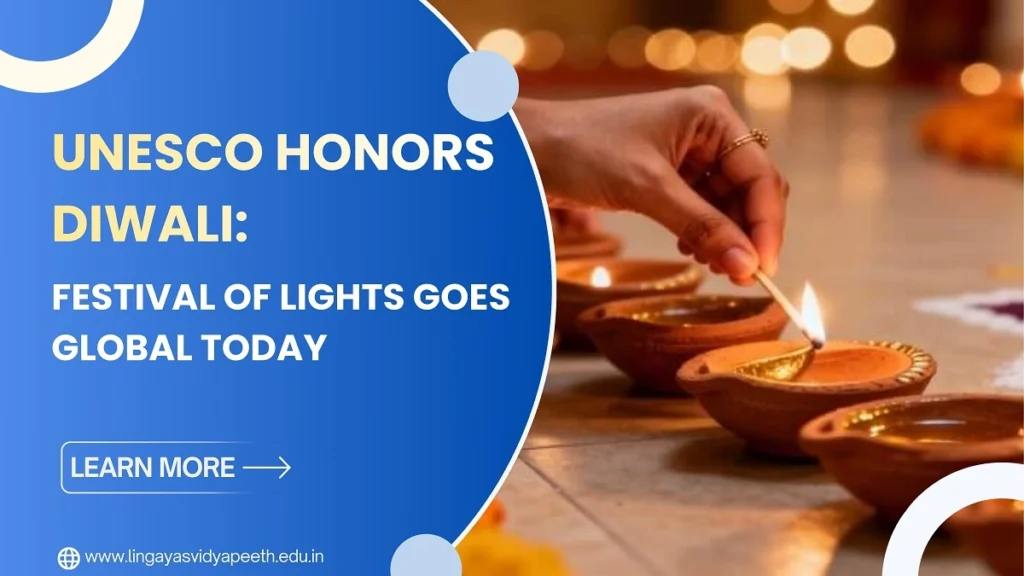
Hey there! Picture a festival filled with glowing lamps, sweet treats, family laughter, and a whole lot of joy. Now imagine that festival getting worldwide recognition. That’s exactly what just happened with Diwali.
On December 10, 2025, UNESCO officially added Deepavali (Diwali) to its Representative List of the Intangible Cultural Heritage of Humanity. With this, Diwali became the 16th Indian tradition to earn this prestigious spot. Pretty amazing, right?
So what does this mean, and why should you care? Let’s break it down in a simple, fun way.
What Is Diwali—and Why Do People Love It So Much?
Diwali is one of the most celebrated festivals in India and across the globe. Known as the Festival of Lights, it’s all about lighting clay lamps (called diyas) to brighten homes and hearts.
While Diwali is mainly a Hindu festival, it’s also celebrated by Sikhs, Jains, and Buddhists, each with their own traditions and stories. The name Deepavali comes from Sanskrit and literally means “a row of lights.”
The festival usually lasts five days and falls in October or November, depending on the lunar calendar. In 2025, Diwali was celebrated on October 20. Today, more than one billion people worldwide take part in the celebrations!
From cleaning homes and buying new clothes to sharing sweets like laddoos and barfis, Diwali is a full-on celebration.
At its heart, the festival symbolizes good triumphing over evil, light over darkness, and knowledge over ignorance. Some link it to Lord Rama’s return to Ayodhya, while others honor Goddess Lakshmi, the symbol of wealth and prosperity.
Different stories—same powerful message.
What Is UNESCO’s Intangible Cultural Heritage List?
You might be wondering: What exactly is this UNESCO list?
UNESCO (the United Nations Educational, Scientific and Cultural Organization) works to protect cultural traditions that are passed down through generations. These aren’t monuments or buildings—they’re living traditions like festivals, dances, crafts, and rituals.
The Intangible Cultural Heritage List, launched in 2003, now includes 700+ cultural practices from over 140 countries (as of 2025). To make the list, a tradition must celebrate diversity, respect human values, and strengthen communities.
India has already made a strong mark with traditions like:
- Yoga (2016)
- Kumbh Mela (2017)
- Durga Puja (2021)
- Garba (2023)
With Diwali added, India now has 16 recognized traditions—a big win for Indian culture on the global stage.
How Did Diwali Make the Cut?
India nominated Diwali in 2024, and after careful review, UNESCO’s committee approved it during a meeting in Paraguay in December 2025. Diwali stood out among 67 nominations worldwide.
Why? Because Diwali is more than just a festival—it’s a community experience. It brings people together across religions, regions, and even countries. From sharing gifts and decorating homes to making colorful rangolis, the festival is all about togetherness.
UNESCO also highlighted Diwali’s message of peace and harmony, something the world really needs right now. Plus, let’s not forget its economic impact—Diwali shopping alone generates around $10 billion annually in India, supporting millions of livelihoods.
Prime Minister Narendra Modi celebrated the announcement on X, calling it a proud moment and encouraging people to learn more about India’s heritage.
How Do People Celebrate Diwali?
If you’ve never experienced Diwali, here’s a simple snapshot of how it’s celebrated:
- Clean & Decorate: Homes are cleaned to welcome positivity. Diyas, lights, and door hangings go up everywhere.
- Prayers & Rituals: Families pray to Goddess Lakshmi and perform aarti with lamps.
- Sweets & Gifts: Friends and relatives exchange sweets (mithai), gifts, and smiles.
- Fireworks: Evenings light up with fireworks—though many now choose eco-friendly options.
- Festive Feasts: Delicious food like puri, halwa, and chole brings everyone together.
And Diwali isn’t limited to India. Countries like Nepal, Sri Lanka, Malaysia, Fiji, and even cities like New York and London celebrate it with grand events.
Why This Recognition Matters—Especially for Students
This UNESCO recognition helps ensure Diwali is preserved for future generations. It encourages schools to include it in cultural studies and attracts tourists eager to experience authentic traditions.
At the same time, it opens important conversations—like reducing pollution from fireworks and promoting eco-friendly Diwali celebrations.
Most importantly, it reminds us that culture matters. In a fast-changing, globalized world, traditions can easily fade. UNESCO’s recognition helps keep them alive.
For students, Diwali is more than a holiday—it’s a lesson in values, diversity, kindness, and hope.
Wrapping Up
With UNESCO’s decision on December 10, 2025, Diwali now shines brighter than ever. As India’s 16th entry on the Intangible Cultural Heritage List, it joins some of the world’s most treasured traditions. Diwali isn’t just about lights and sweets—it’s about unity, resilience, and joy.
Also Read
Best MBA Specializations in India for 2026
Viksit Bharat Shiksha Bill 2025: Easy Student Guide
Top 7 Emerging Careers for 2025 Students Should Know Today
BCom vs BBA: Which Degree Is Right for Your Career in 2026?
Math Day 2025: Honoring Ramanujan & Beauty of Numbers Now